top of page

THE AWARD-WINNING BOOK BY JOEL BROWN
Lorem ipsum dolor sit amet, consectetur adipiscing elit, sed do eiusmod tempor incididunt ut labore et dolore magna aliqua. Quis ipsum suspendisse ultrices gravida. Risus commodo viverra maecenas accumsan lacus vel facilisis. Lorem ipsum dolor sit amet, consectetur adipiscing elit, sed do eiusmod tempor incididunt ut labore et dolore magna aliqua. Quis ipsum suspendisse ultrices gravida. Risus commodo viverra maecenas accumsan lacus vel facilisis.
MEDIA & PODCAST

Search


How to Maintain the ‘Heartbeat of Work’ in the Age of Ai
Time | Charter by Michelle Peng Over the past 40 years, MIT professor Sherry Turkle has studied how technologies from Tamagotchis to Twitter have reshaped our identities, our ability to sustain human connection, and our work. In Artificial Intimacy, Turkle, the founding director of the MIT Initiative on Technology and the Self, warns that overreliance on AI chatbots threatens to erode the most human parts of life. When we’re immersed in conversations with AI, we “lose our cap


AI claims it can resurrect the dead. I tried it.
It was covid times, and I was thinking about death already when I first encountered “grief tech” — generative artificial intelligence programs that put you in contact with an avatar of the deceased or help you prepare an avatar that will allow other people to talk to “you” when you’re gone.

Sherry Turkle on the Risks of AI Companionship
AI wants to be your friend. And your therapist. And your lover. It’s not an entirely new offer, author and MIT professor Sherry Turkle reminds us, but it’s one that’s grown more dire as AI has improved. In a conversation with Nicholas Thompson, CEO of The Atlantic, Turkle describes the dangers of anthropomorphizing generative AI, gleaned from hundreds of conversations she conducted (with real humans) for her new book, Artificial Intimacy: Who We Become When We Talk To Machine


If an AI bot says 'I love you,' does it mean it? 'Artificial Intimacy' book explores AI relationships
What does it mean to have a relationship? Do both parties have to be human?
An increasing number of people say they don't; that conversing with, confiding in, and sometimes falling in love with an artificial intelligence bot that "performs" empathy, but has none, is not only acceptable, but sometimes preferable.


What AI Can’t Replace: A Conversation with Dr. Sherry Turkle
Drawing on decades of research into the relationship between people and technology, Sherry explains why AI’s ability to simulate empathy should not be confused with genuine human understanding. From a touching story about her granddaughter to the growing use of chatbots as friends, companions, and therapists, she challenges us to consider what we may be giving up when we turn to technology to meet our emotional needs.


Artificial Intimacy | Episode 3052: Sherry Turkle on Who We Become When We Talk to Machines
PODCAST: Andrew Keen “The original sin of generative AI is having chatbots speak in the first person.” — Sherry Turkle Fifteen years ago, at the height of the social media boom, the MIT technology scholar Sherry Turkle came on the show to warn that we were now “alone together.” She was, of course, chillingly prescient. A decade and a half later, she warns in her new book Artificial Intimacy that if social media came for our attention, AI is now gunning for our human capacity
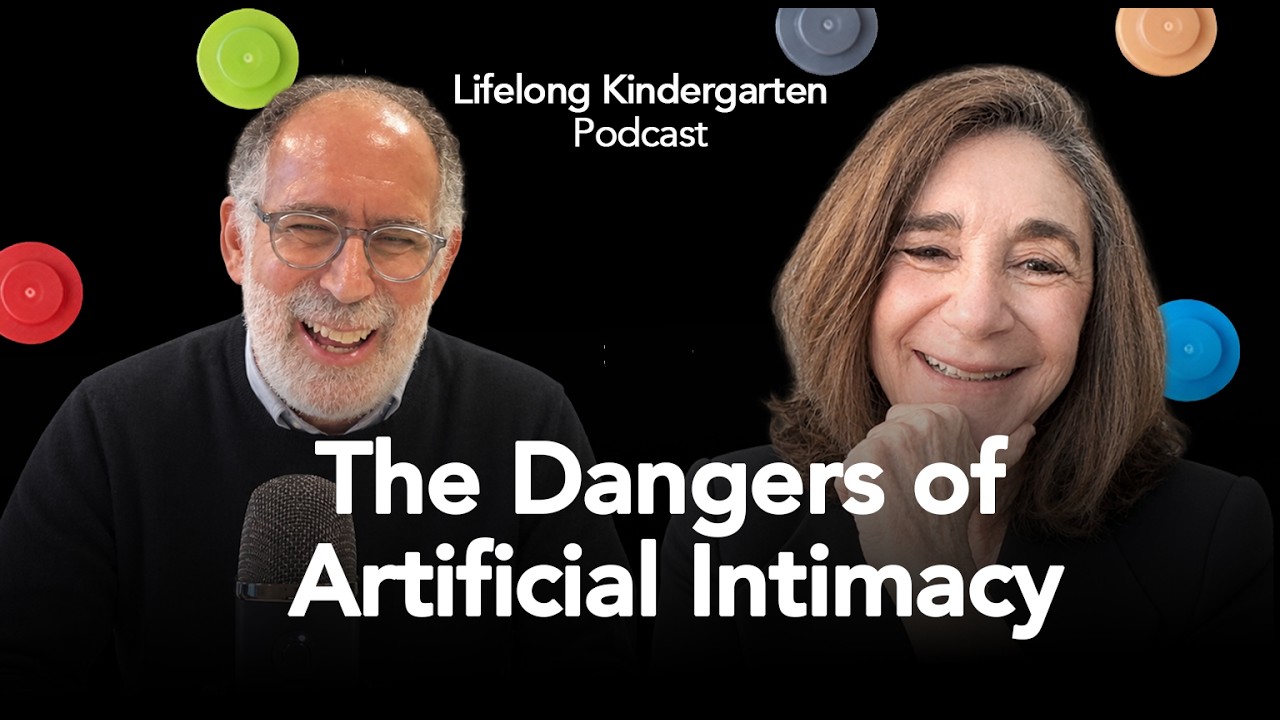
Sherry Turkle: The Dangers of Artificial Intimacy
Sherry Turkle discusses her new book “Artificial Intimacy: Who We Become When We Talk to Machines,” exploring how our everyday use of AI chatbots changes how we relate to other people in our lives and how we think about ourselves.

How Your AI Companion is Rewiring Your Brain
Kara and Sherry talk about how chatbots aren’t just competing for our time – they’re designed to become objects of emotional attachment. They also discuss the risky appeal of friction-free relationships, the importance of boredom and vulnerability to development, and what we lose when we outsource our thinking and emotional lives to machines.


Can AI companionship cure loneliness – or deepen it?
PBS News Horizons - (February 27, 2026) Horizons moderator William Brangham explores AI relationships with Sherry Turkle, Justin Gregg and Nick Thompson.


“How our relationships are changing in the age of artificial intimacy
TED Radio Hour (NPR) – “How our relationships are changing in the age of artificial intimacy” (August 2, 2024). With Manoush Zomorodi. “MIT sociologist Sherry Turkle on the psychological impacts of bot relationships.”


Who Do We Become When We Talk to Machines?
Sherry Turkle in conversation with Audrey Borowski. Leverhulme Centre for the Future of Intelligence, University of Cambridge, UK, June 10, 2024. Streamed by The Philosopher (www.thephilosopher1923.org).


Body Electric: If a bot relationship FEELS real, should we care that it’s not?
TED Radio Hour (NPR) – “Body Electric: If a bot relationship FEELS real, should we care that it’s not?” (July 9, 2024). Host Manoush Zomorodi talks to Sherry Turkle about her new research into what she calls “artificial intimacy,” and its impact on our mental and physical health.2024). With Manoush Zomorodi. “MIT sociologist Sherry Turkle on the psychological impacts of bot relationships.”


Why virtual isn’t actual, especially when it comes to friends.
The Harvard Gazette – Article by Liz Mineo, 12/5/2023, about Prof. Turkle’s keynote at the Harvard Kennedy School/STS Conference on AI & Democracy, held November 30, 2023.
Check back soon
Once posts are published, you’ll see them here.
bottom of page