Artificial Intimacy | Episode 3052: Sherry Turkle on Who We Become When We Talk to Machines

PODCAST: Andrew Keen
“The original sin of generative AI is having chatbots speak in the first person.” — Sherry Turkle
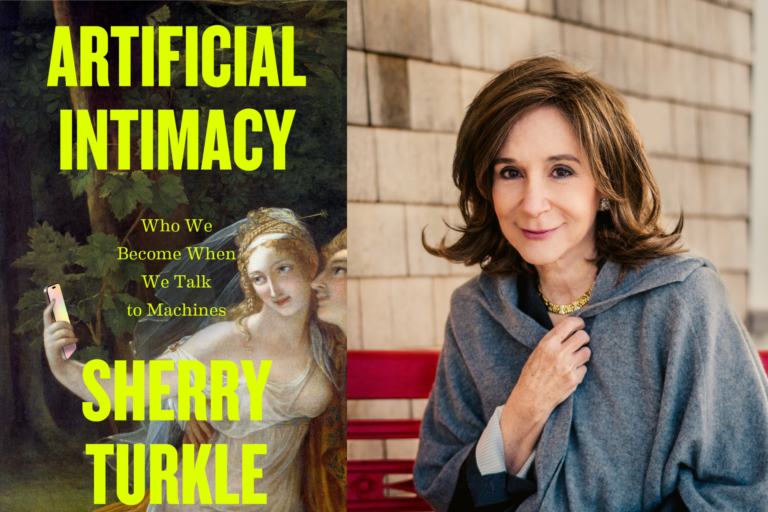
Fifteen years ago, at the height of the social media boom, the MIT technology scholar Sherry Turkle came on the show to warn that we were now “alone together.” She was, of course, chillingly prescient. A decade and a half later, she warns in her new book Artificial Intimacy that if social media came for our attention, AI is now gunning for our human capacity for attachment.

Who — or, more chillingly, what — do we become when we talk to machines? Turkle never quite says, but the implication is of a kind of Night of the Living Dead state in which we appear fluent and animated, performing the outward motions of intimacy, but there’s nobody really home. Which is exactly what Turkle says the chatbot is. A machine trying, without much success, to be human.
A chatbot has no stake in the reality of humanness, Turkle explains. It can’t love, for example, because that kind of empathy requires us to be enclosed in a body and have a fear of death. The increasing ubiquity of bots mimicking humans represents an emergency for humans, she warns. It explains both our epidemic of loneliness and today’s culture of apocalyptic fear about the future of our species. Just as artificial intimacy is a misnomer, so it turns us into impossible creatures. Like those unicorns beloved by the very Silicon Valley vendors of these artificial creatures.

Comments